It looks like a complaint about construction and extra costs. But it also asks us to question power. When the president talks to traditional rulers, who have been in power longer than Nigeria’s democracy, and tells them to watch their governors, he is asking for something our democracy lacks. He wants people to check what is happening in their states and hold their leaders accountable, putting citizens above politics.
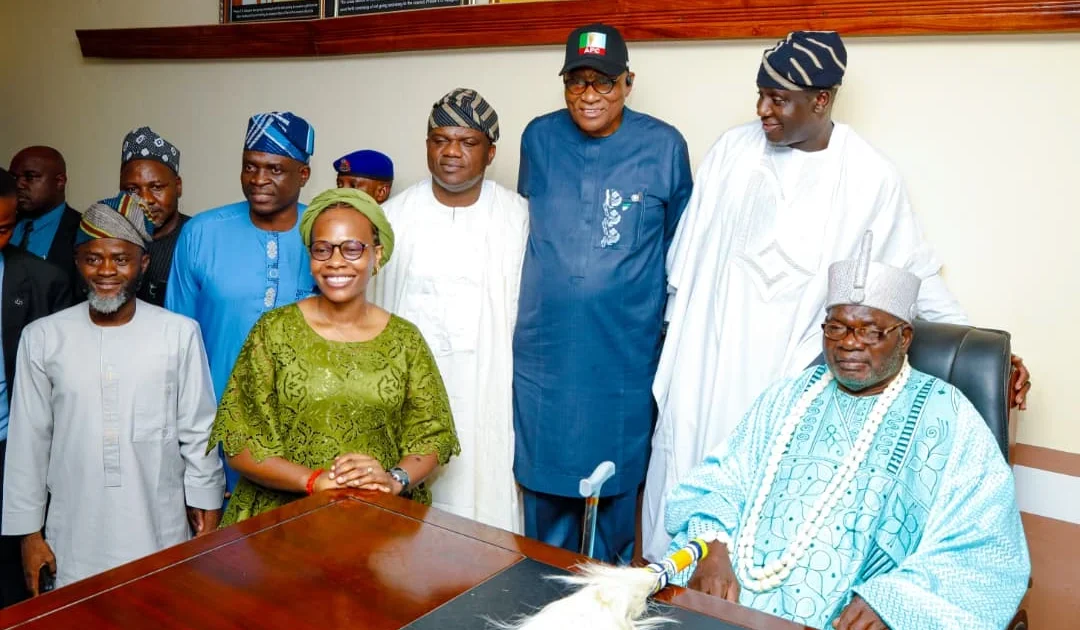
On Thursday in Abuja, President Bola Tinubu met with traditional rulers from Oyo state, led by Oba Rashidi Ladoja, the Olubadan of Ibadanland. He switched to his pro-democracy mode and urged citizens to assess their governors’ work. He hinted at which states are using federal funds well and which are not. He told governors to “stop building flyovers where there is no numeric traffic.”
His message was clear. States are now getting much larger federal funds than they did when he and Ladoja were governors over twenty years ago. The President said many states now receive four to five times what they used to get. So, the excuse governors used for poor performance is no longer valid. In simple words, there should be no more silly signboards saying “bear with us, this road belongs to the federal government” that used to be common on Lagos roads during the last administration.
Yet, for millions of Nigerians, daily life is still very hard. Roads that connect farms to markets are in bad shape. Primary healthcare centres lack basic supplies and staff. Public schools are getting worse. Rural areas are exposed to insecurity because access roads are bad and security agencies cannot respond fast enough. If someone has a seizure, there is no quick help. Ambulances are not available in many communities. Water systems break down. Drainage systems fail after a little rain. Youth unemployment is still very high.
The best governments do not just build things to show off. They create systems that make life easier for regular people. A road that helps farmers move their goods can bring more economic benefit than a billion-naira flyover built where traffic is low. A working primary health centre can save more lives than another ceremonial opening. Investing in rural roads, water supply, drainage, schools, and public safety often gives better economic results than projects aimed only at gaining political visibility.
That is the standard by which governors should now be judged. Every big project announced by a state government should raise simple but important questions. Was this what the community really needed? What economic benefits will it bring? How many jobs will it create? Will it cut down travel time, boost productivity, make security better, or improve access to healthcare and education? Could the same money have been used for better public benefits elsewhere?
For too long, accountability has only flowed towards Abuja. Every economic challenge, every rise in prices, and every failure in governance eventually ends up with the Federal Government. Meanwhile, many state governments avoid serious public scrutiny, even though they control a lot of money.
This imbalance weakens our democracy. Nigeria has a federal system. The quality of governance that most people experience is shaped not just by decisions in Abuja but also by those made in state capitals. Governors manage big budgets. They decide on infrastructure needs. They affect healthcare, education, agriculture, city planning, environmental management, and local economic growth. Their choices determine whether businesses thrive or struggle. They also influence whether communities are safer or more at risk.
Citizens now have a new civic duty. Every major project announced by a state government should prompt important questions. Was this the community’s greatest need? What measurable economic benefit will it produce? How many jobs will it create? Will it reduce travel time, improve productivity, strengthen security, or expand access to healthcare and education? Could the same resources have delivered greater public value elsewhere?
These are not questions meant for the opposition. They are questions for democracy. Accountability does not mean hostility. It means being a good citizen. Tinubu should not treat this as a one-time expression of anger. He should make it a regular part of his agenda. He should engage with the people in town halls using language that a trader in Bodija or Agege market can understand. This should not just happen during elections. Transparency shown once in a moment of frustration is just for show. Transparency as a policy is real accountability.
So, here is what every Nigerian should do when they see a flyover being built over an empty road in their state: ask who approved it, how much it cost, and what other projects were not done because of it. Ask your governor to disclose where the FAAC allocations went, month by month. Ask if the decisions made in your state are helping your family or just decorating a skyline for the next campaign poster. This is not being cynical. It is the basic responsibility every citizen has towards their future.
There is a history of this kind of presidential intervention that forces citizens to question their state leaders, and it is worth remembering. On May 7, 1933, during his second fireside chat, America’s President Franklin D Roosevelt spoke to ordinary Americans about how the Federal Emergency Relief Administration would work. He explained how the money would move, what states needed to do, and why the program existed. It was a lesson in making government clear. It also encouraged citizens to ask their governors and mayors an uncomfortable question: ‘If Washington sent the relief, why isn’t it reaching me?’
Here is the key point. Nigerians should see that when the centre shows how governance works, we should follow the money, the mandates, and how allocations are made. It becomes much harder for governors to hide behind unclear information. That is the important message from Thursday’s comments. Use it.
So, here is what every Nigerian should do when they see a flyover being built over an empty road in their state: ask who approved it, how much it cost, and what other projects were not done because of it. Ask your governor to publish where the FAAC allocations went, month by month. Ask whether the choices made in your state capital are protecting your family or merely decorating a skyline for the next campaign poster. This is not cynicism. It is the ordinary duty of care a citizen owes to their future.
Now, Tinubu’s comments should not become an excuse for political attacks on governors. The President’s remarks should encourage public discussions based on facts. The President also has a duty because of what he said. He should keep talking and explaining. Regular public conversations from the president that clarify federal responsibilities from those of the states would improve public understanding and strengthen oversight. Nigerians are ready to ask questions. They are just waiting for the allocation receipts.
Drop your comment
No comments yet — be the first to drop the gist 👇