On 17 July 1998 in Rome, the world showed support for international justice by adopting the statute that created the International Criminal Court (ICC). Since 2010, 17 July has been marked as International Justice Day.
The Rome Statute was a significant milestone after the genocides in the former Yugoslavia and Rwanda, along with wars in Kosovo, Afghanistan, and the Democratic Republic of the Congo (DRC). There was great hope for a permanent court with international power aimed at stopping conflict, crimes against humanity, and genocide.
But now, 28 years later, the ICC and international justice face serious problems. The hope for universal accountability is clouded by challenges the ICC faces both within and outside. The United States (US) has threatened to break down the court, while Burkina Faso, Mali, and Niger have said they want to leave the statute.
The ICC's prosecutor is struggling, and many cases are failing due to lack of cooperation and efforts to weaken the court’s work. On 13 July, US Secretary of State Marco Rubio announced a major campaign to dismantle what he calls the ICC’s threat to US sovereignty. This campaign aims to ‘systematically disable the ICC’s ability to operate.’ One major worry is that the US is pressuring countries that receive military or other support to reject the court’s authority.
Many have criticized this move, including the European Union. It has reopened discussions about international justice, the rule of law, and the ICC’s role in holding people accountable for serious human rights violations. Washington’s campaign against the ICC is not new. In the early days of the court, the US was the first country to ‘unsign’ the Rome Statute. George W Bush’s administration was worried that US soldiers might be prosecuted for crimes abroad, so they made over 100 bilateral immunity agreements to protect US citizens from ICC prosecution.
Later US administrations under Barack Obama and Joe Biden did not fully support the ICC, but they did back global accountability. They even appointed special envoys for war crimes and set up a global justice office. Recent ICC cases against Israeli leaders for war crimes have made Washington’s position tougher. President Donald Trump’s February 2025 executive order called ICC investigations ‘illegitimate and politically motivated.’
Trump’s administration imposed sanctions on ICC judges and prosecutors involved in these cases, as well as UN experts who accused Israel of genocide against Palestinians and NGOs working in the occupied Palestinian territories. The reasons Niger, Mali, and Burkina Faso give for wanting to leave the ICC are also not new. They claim the court unfairly targets Africa and acts as a tool of neo-colonial oppression.
Supporters of the court consistently argue that by investigating international crimes in Africa and other places, the ICC helps victims and survivors and promotes justice. But the current attacks on the ICC need more than just arguments and support. Countries that believe in the rule of law and accountability must take a stronger stance.
The ICC is not meant to be the only court handling international crimes. In a world where countries investigate and prosecute these crimes themselves, the ICC would only step in when countries cannot or will not act. Taking a stronger stance doesn't just mean supporting the ICC’s work. It means countries must ensure accountability, whether on their own or together. Law associations, NGOs, and civil society must also push back against the decline of justice.
Many efforts to promote justice get lost amid the attacks on institutions like the ICC. Support for the ratification of the crime of aggression is one example. Other initiatives include new international justice instruments, like the Ljubljana-The Hague Convention adopted in 2023 and the Draft Articles on Prevention and Punishment of Crimes Against Humanity, which is expected to be adopted by 2029.
These efforts could improve cooperation and encourage better state involvement, which is essential for justice at home. Many countries also use universal jurisdiction to investigate and prosecute genocide, crimes against humanity, and war crimes committed elsewhere. This approach leaves fewer places for alleged perpetrators to hide from accountability.
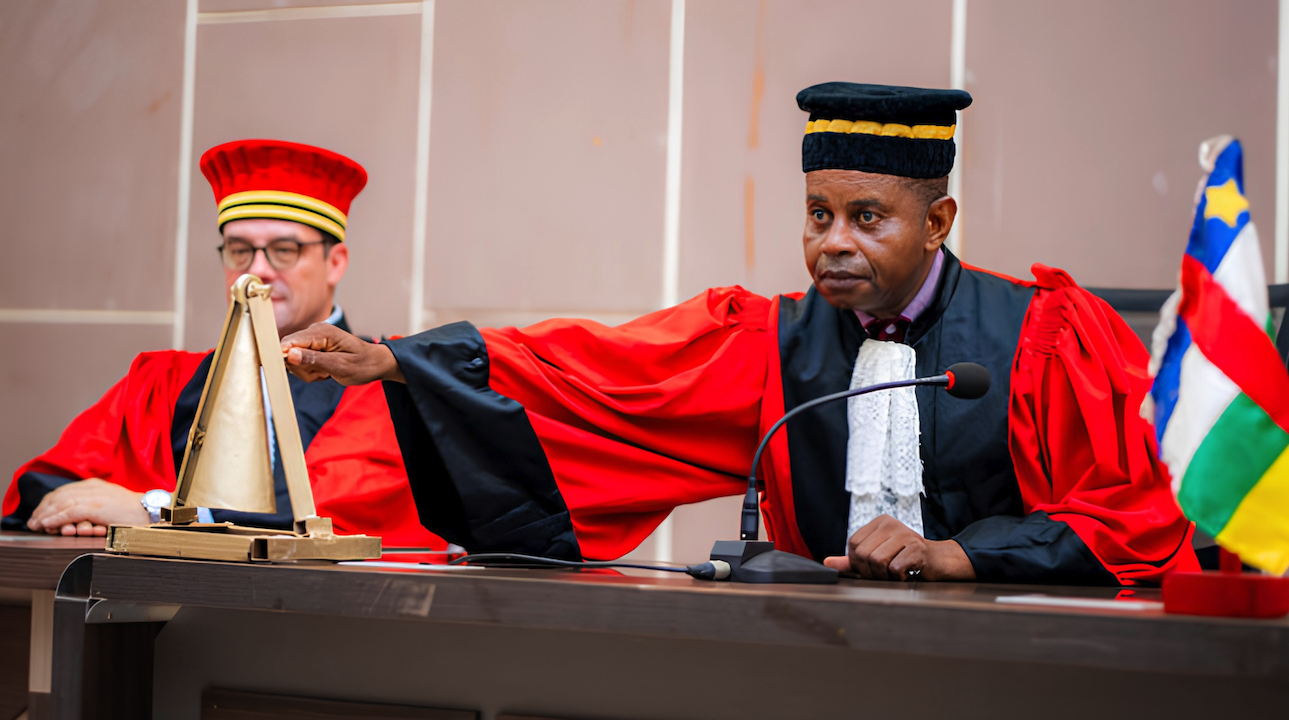
In Africa, there are signs of hope. Many African countries, including those not part of the ICC statute like Ethiopia and Zimbabwe, have laws against war crimes and genocide, allowing for domestic trials. Last month, the Central African Republic’s hybrid Special Criminal Court began the trial of former president François Bozizé and his co-accused, Eugène Ngaïkosset, Vianney Semndiro, and Firmin Danboy for crimes against humanity.
Meanwhile, the DRC has set up a new international advisory council of senior war crimes lawyers to support its efforts for justice in its ongoing conflict. South Africa has rallied support for its case against Israel at the International Court of Justice, focusing on the Genocide Convention. Eighteen countries have backed South Africa’s case, with another 14 formally supporting it, including Algeria, the Comoros, Djibouti, Egypt, Libya, Namibia, Western Sahara, and Zimbabwe. The African Union, the Arab League, the Organisation of Islamic Cooperation, and the Non-Aligned Movement also officially support the case.
Elsewhere in Africa, lawyers are working to apply universal jurisdiction for crimes outside their own regions. In Kenya, the Office of the Director of Public Prosecutions is looking into a request from Legal Action Worldwide and the African Centre for Justice and Peace Studies to investigate members of Sudan’s Rapid Support Forces for war crimes and crimes against humanity.
As countries take more responsibility for holding people accountable for international crimes, there is a need for continued financial and political support for investigations. Stronger cooperation with international accountability systems is also necessary. The ICC may be facing challenges, but the international justice system should not fall apart. Broader efforts to hold people accountable for international crimes remind us that global justice goes beyond the ICC. Countries must work to close the gap of impunity and strengthen justice.
Drop your comment
No comments yet — be the first to drop the gist 👇