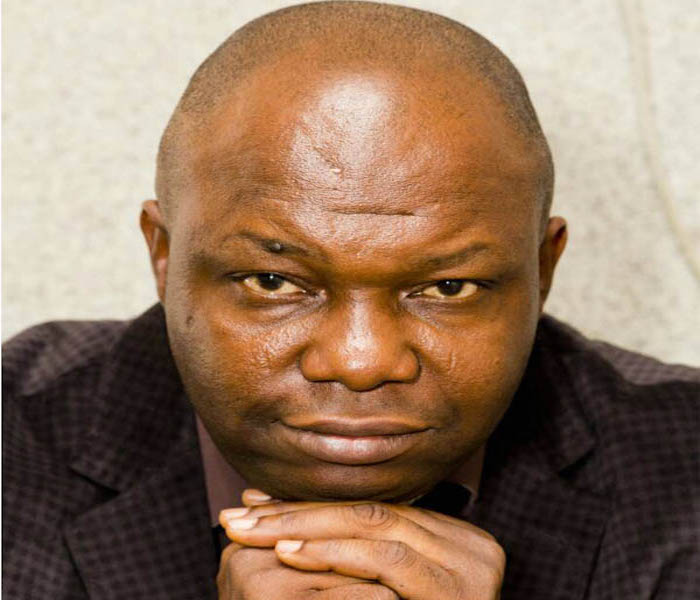
Last Wednesday, popular political commentator Ibrahim Khalil, also known as Dan Shagamu, was brutally killed in Kumbotso, Kano. His throat was slit. Khalil was known for his sharp posts in Hausa on Facebook and TikTok. He often criticized the APC-led government, President Bola Tinubu, and the military. Kano Governor Abba Kabir Yusuf was also a target of his anger, as he often hit back hard. Khalil regularly called out economic hardship, insecurity in the north, and alleged army abuses against Fulanis. Amnesty International Nigeria condemned his murder, pointing out the rising threats to government critics.
This murder echoes the killing of 35-year-old Dr. Bala Mohammed on July 10, 1981, also in Kano. That murder marked a significant political crime during the Second Republic. Although decades apart, both killings highlight a continuous threat: political thugs acting as violent enforcers for those in power, leaving a long history of violence and broken institutions in Nigeria.
Forty-five years before Dan Shagamu's death, Dr. Mohammed was killed in the same city. His murder is often referred to as the Kano 'July 10 Rampage.' It remains one of the most chilling political killings in Nigeria’s history. The masterminds behind that event were political thugs, the same violent group that disrupted peace in Benue State last week and likely killed Dan Shagamu. These enforcers have long served as brutal tools for political power, leaving behind destruction and chaos.
Dr. Mohammed's murder was fueled by a mix of traditional loyalties, party conflicts, and power struggles between federal and state authorities. His death showed the terrible violence tolerated by the state against political opponents. At that time, Bala was the Special Adviser on Political Affairs to Alhaji Abubakar Rimi, the radical leftist governor of Kano State from the People’s Redemption Party (PRP).
Even though the next elections were two years away, political tensions had already gripped Kano in preparation for the 1983 elections. The ruling National Party of Nigeria (NPN) was desperately trying to gain control of Kano's large voter base. Violent language and inciting phrases were as common as tuwo masara on the streets of Kano.
The immediate cause of this political unrest was the growing conflict between Governor Rimi and the Emir of Kano, Alhaji Ado Bayero. In early July 1981, Rimi sent an official query to the Emir, asking for explanations regarding what the state saw as insubordination.
The NPN seized on this query to challenge Rimi’s administration. They rallied royalists, traditionalists, and other political opponents, framing the query as an attack on the Emir. They claimed Rimi wanted to humiliate the traditional leadership of the Kano Emirate.
In this narrative, the NPN targeted Dr. Bala Mohammed. He was seen as the main strategist behind the query and was also viewed as the architect of the administration’s anti-feudal policies. His reputation as someone likely to challenge traditional privileges made him a prime target.
On Friday, July 10, 1981, chaos erupted in Kano after Jumaat prayers. Political mobs and armed thugs, moving with wild rage, swept through the city. Before anyone could react, violence engulfed Kano. Armed with cutlasses and daggers, the mobs claimed to be defending the throne against those who showed disrespect to royal authority.
Government buildings perceived to support Rimi’s PRP were the first targets. The Kano State House of Assembly, various ministries, Radio Kano, and The Triumph newspaper offices were set ablaze.
Next, the mob headed to Dr. Bala Mohammed’s home in the GRA area. He was inside his house. The mob surrounded the building, preventing his escape. They attacked him with machetes and knives, inflicting severe wounds. After they finished, they set his house on fire, taking his life along with his valuable documents and research materials. His charred remains were found in the wreckage.
The public outrage that followed forced President Shagari to act. He stopped his cigarette break to set up a Judicial Commission led by Justice EA Fernandez to investigate the violence.
The commission found that state security forces were complicit in the killings. The Nigeria Police, under Inspector-General Sunday Adewusi and influenced by the NPN, stood by while the rioters caused destruction for hours. Justice Fernandez concluded that the police allowed the mob to run free.
By the end of the violence, around 34 people were dead, with Dr. Bala Mohammed being the most high-profile victim. Property worth millions of Naira was destroyed. Despite the commission’s findings, the people behind the violence were never punished. The same might happen with the murder of Dan Shagamu. This lack of accountability has led to a dangerous trend of impunity for state-sponsored violence in Nigeria.
I share this dark history to highlight a crucial truth about conflict. The Yoruba saying goes: “Ìbèrè ogun l’àá mò, ẹnìkan kìí mọ ìparí è”, We only know the beginning of a war; no one can tell how it will end. This serves as a warning about the unpredictable and destructive nature of political violence that has become common in Nigerian politics.
During the First Republic, violent political thugs known as enforcers emerged in the Western Region. They were called Májêkóbàjé (Do not allow things to deteriorate). Ironically, under their watch, public order completely collapsed as political arson, known as Operation Wetie, turned homes and public buildings into ash.
Across Nigeria, different names are used for these political enforcers. In Lagos, they are called Òráìsà (from their chant, “Alright, Sir!”) and modern Agbèròs. In the North, they are known as Yan Daba and are often referred to nationwide as “Kill and Go.”
In the North, the ruling Northern People’s Congress (NPC) consistently suppressed political rivals like Aminu Kano’s NEPU and Joseph Tarka’s UMBC. The NPC used the Native Authority police and Yan Daba enforcers to crush dissent, unlike South Africa’s uMkhonto weSizwe, which fought against state oppression. Politicians unleashed violence that spiraled out of control, leading to the end of Nigeria’s First Republic. This breakdown of law and order gave the military justification for the bloody coup on January 15, 1966.
Now, let’s look at what happened recently with Peter Obi, the presidential candidate of the NDC. You may not like him or agree with his methods. But during his recent trip to Benue State, Nigeria was almost faced with a tragedy similar to that of Bala Mohammed. Hired political thugs blocked Obi’s way into Benue, nearly causing a repeat of the 1981 Kano massacre. If Obi’s team had returned fire, it could have led to widespread unrest.
The thugs who attacked Peter Obi and those who killed Bala Mohammed years ago are part of the same legacy. They belong to a group that fears nothing. Their actions show a long history of political violence that has troubled Nigeria for almost seven decades.
The reason Peter Obi went to Benue State is not important if it was lawful. But as his convoy moved, political thugs, armed and ready, stopped him near the Air Force Base on Boko Road. The mob blocked the highway, chased his vehicles, and threw stones. Recognizing the danger, Obi's team tried to escape. This was the second time Obi faced such hostility in Benue. In April 2025, Governor Reverend Father Hyacinth Alia similarly prevented Obi from visiting IDP camps, citing security issues.
Political leaders often support such actions. They believe such treatment is necessary for someone like Obi.
Long before today’s street thugs came along, their predecessors roamed electoral paths with impunity. Nigeria’s political scene has been built around the idea that power is rarely gained through discussion; it must be seized through violence.
Since the British colonial rule ended on October 1, 1960, weapons of intimidation, cutlasses, clubs, stones, and guns, have been part of Nigeria's elections. The country has come to accept that political thugs are essential players, reflecting Wole Soyinka’s 1995 satire, The Beatification of Area Boy. In a society marked by decay and failure, Soyinka’s work showed how street thugs became political power brokers. “Area boys”, a term for street criminals, became the moral guides of society, unlike the predatory military and political elite.
Today, political thugs set the limits of public involvement. They enforce the harsh reality of a Yoruba saying, brute physical size does not open the door; only the person with the key can. In modern Nigerian politics, having control over armed groups has become the key to political power. The group that commands the fiercest enforcers usually controls the state. The path to 2027 might be set. Thuggery will define the next elections. The one who controls political thugs will hold the key to the Government House or Aso Rock Villa.
This rise of thuggery is clear in how the National Union of Road Transport Workers (NURTW) has changed. Transport unions in Nigeria were not always known for violence. In the early 20th century, they played important roles in the economy and civic issues. Their reputation grew in 1917 when John Holt and the Miller Brothers entered the trade from the Ejinrin lagoon market.
By the Second Republic, Lagos transport changed as municipal buses were replaced by private dáńfó. Armed union groups took control of motor parks from local governments. This shift worsened during the political conflict between the NPN and Governor Lateef Jakande’s UPN. To undermine UPN’s power, the NPN used Adebayo Ogundare, known as Bayo Success, to violently take over key transit hubs. He became a powerful figure until his death in 2002. Today, MC Oluomo leads the union and is a significant figure in Lagos APC.
In recent times, union leaders have acted like political warlords. In exchange for suppressing voters in opposition areas, state actors often give them access to park revenue and protection from prosecution. As a result, street enforcers have transitioned from informal collectors to essential components of the electoral machinery, often more powerful than the police.
The long-term issue with this system is that weapons used during elections do not disappear after results are announced. The political enforcer from one election often turns to robbery, gang violence, or kidnapping when elections are not happening. By using poverty for political gain, the elite have built a violent system that threatens the safety of everyone, regardless of their class.
The Benue State government's attempt to distance itself from the recent blockage of Peter Obi, by questioning why he didn’t ask for clearance, ignores the real issue of political intolerance. When state governments rely on informal enforcers to restrict opposition figures, they weaken the rule of law and create more instability.
To break the cycle seen in Benue last week, we must demilitarize elections, take away state protection from political thugs, and prosecute them along with their political supporters. Nigeria needs to dismantle the systems that allow state-approved political violence. The Yoruba saying cautions us: it is when the Iroko tree is still young that we must uproot it; if it grows too big, it will demand sacrifices from the whole community.
By now, Hyacinth Alia’s political thugs should be answering questions from the police. Alia wanted to keep the political situation in Benue frozen while still using thugs for political gain, just like in the First Republic. If Nigeria does not hold those responsible for political violence accountable, politics will continue to be about brute force, as seen in the murder of Dan Shagamu. We will soon reach a point where public policy is decided not by debate, but by the power of armed mobs.

Drop your comment
No comments yet — be the first to drop the gist 👇