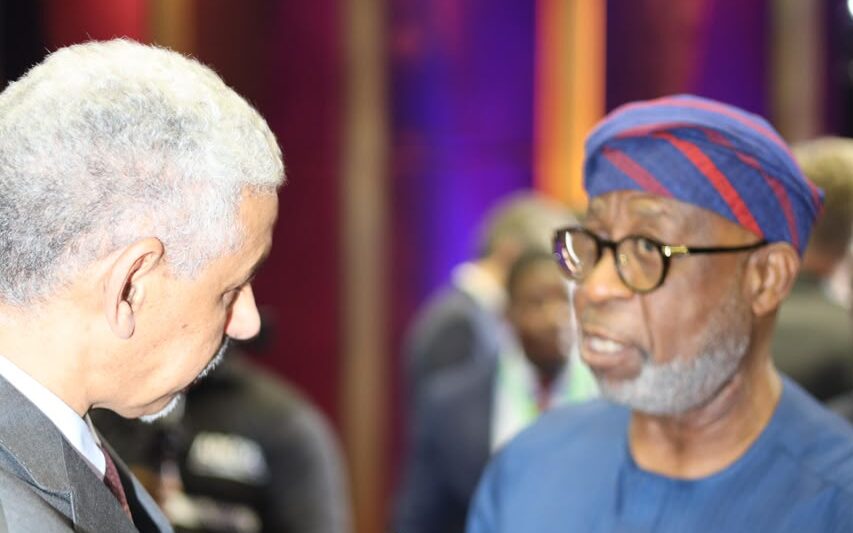
Nigeria and the African Development Bank (AfDB) are calling for more African ownership of the continent’s mineral resources. They want countries rich in minerals to focus on local value addition, work together, and seek strategic funding to promote sustainable economic growth.
This message was shared at the Ministerial Forum on Critical Minerals, Value Chain and Beneficiation: Pathways for African Transformation, held by the African Development Bank in Abidjan, Côte d’Ivoire.
Dele Alake, Nigeria’s Minister of Solid Minerals Development, spoke at the forum. He urged African countries to work together on mineral development instead of just focusing on their own national strategies. Alake emphasized that stronger regional cooperation would help Africa get more value from its rich mineral resources.
As chair of the Africa Mineral Strategy Group (AMSG), Alake said Africa needs to stop exporting raw minerals. He believes the focus should be on adding value, local processing, and building industries to achieve economic independence.
“While the mantra of value addition has ushered in an era of economic independence for mineral-producing nations, we need concrete, actionable strategies to take charge and be in full control of our natural assets to ensure total economic freedom,” he said.
Alake also raised concerns about data sovereignty. He criticized Africa’s dependence on the Joint Ore Reserves Committee (JORC) reporting standard from Australia, saying it is outdated. He called for the use of the Pan African Resource Reporting Code (PARC), created by the Africa Minerals Development Centre (AMDC). This code would give Africa a transparent way to report on its mineral and energy resources while considering the continent’s unique geology and environment.
He suggested creating a West African minerals-processing corridor, based on the Lobito Corridor, from Lagos to Dakar. This would allow countries to specialize in processing certain minerals, cut infrastructure costs, and share investment risks and rewards.
Alake pointed out that this plan would help Nigeria become a regional center for mineral processing and industrial development.
He also expressed worry about Africa’s low level of trade within the continent, which is about 16 percent. In comparison, Asia’s intra-continental trade stands at about 60 percent, while Europe’s is around 70 percent.
Sidi Ould Tah, the President of the African Development Bank, shared his concerns earlier. He talked about the contradiction of Africa having so many mineral resources but getting little economic benefit from them.
He noted that despite having large deposits of key minerals, Africa has not turned these resources into significant growth in Gross Domestic Product (GDP). He added that lack of funding is still a big barrier to developing the sector.
The forum ended with the Abidjan Declaration. This document commits African nations to work together on policies concerning critical minerals, build integrated regional infrastructure, develop value chains, and mobilize capital.
Under this declaration, the African Development Bank promised to use its financial tools, capital-structuring skills, and technical know-how to help mineral-rich countries. This support aims to reduce investment risks and attract both public and private funding for important mineral projects.
The declaration also urges African governments to boost national and regional abilities to develop viable projects, create lasting jobs, and increase local value addition in mining.
Participants at the forum agreed that better cooperation, improved governance, smart financing, and more control over mineral resources are key to ensuring Africa’s mineral wealth leads to real and lasting economic progress.
Over 20 African ministers dealing with mining, energy, industry, natural resources, and green economy attended the meeting. They were joined by representatives from the African Development Bank, the African Export-Import Bank (Afreximbank), the US Export-Import Bank, and mining companies from Germany, Canada, and the United States.


Drop your comment
No comments yet — be the first to drop the gist 👇