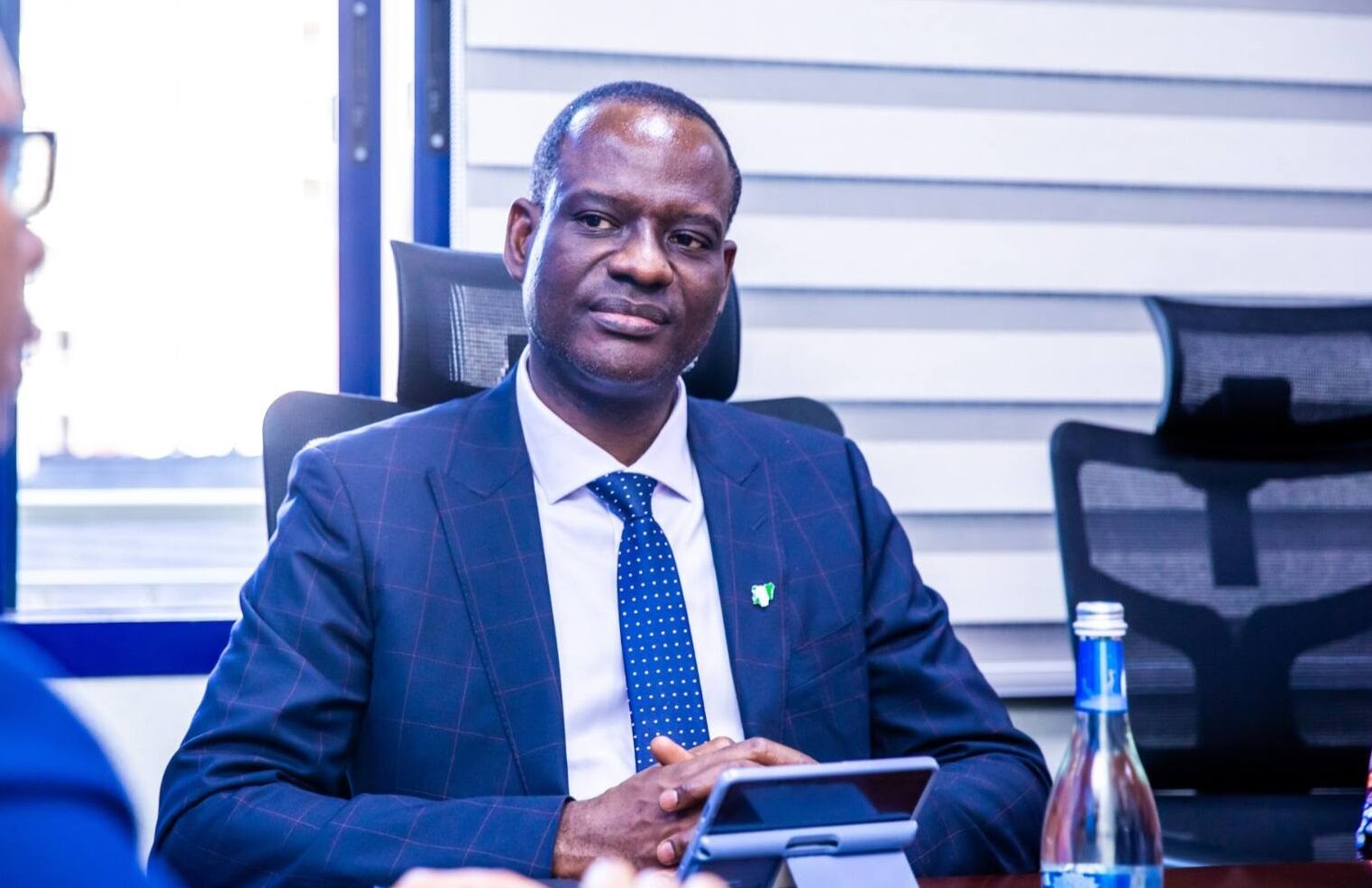
The Minister of Finance and Coordinating Minister of the Economy, Taiwo Oyedele, has said that Nigeria can become a $1 trillion economy by 2030. He believes this goal is realistic and not just a political catchphrase.
At the 7th African Emerging Markets Forum in Abuja, Mr Oyedele spoke on the theme "Building Resilience Amidst Geo-Economic Uncertainties." He mentioned that the government's economic reforms are meant to set Nigeria up for long-term growth.
He explained that the government aims to achieve this target by restoring macroeconomic stability, boosting competitiveness, and attracting more investment. Mr Oyedele said Nigeria has finished the tough part of stabilizing the economy. They are now focusing on turning that stability into investment, higher productivity, and better living standards.
"A trillion US dollar Nigerian economy by 2030 is not a slogan. It’s a target. We plan to trace reform by reform against the work still ahead of us," he stated. He added, "Building resilience amidst geoeconomic uncertainty was never about waiting for the storm to pass. It’s about building an economy and a continent sturdy enough that the reform and the storm become our opportunity to seize."
Reforms Foundation
Mr Oyedele mentioned that President Tinubu’s administration chose to focus on long-term economic fundamentals instead of short-term political gains. This decision came shortly after he took office.
He said the government found an economy struggling with years of problems that discouraged investment, lowered productivity, and made Nigeria less competitive. "The administration inherited an economy weighed down by years of accumulated distortions. Distortions that discouraged investment, weakened productivity, and limited our competitiveness. Postponing reform would have cost us more than confronting it."
"Over the past three years, we have pursued one of the most comprehensive reforms in Nigeria’s modern history. From foreign exchange unification, where we eliminated multiple exchange-rate windows, restoring transparency and predictability to trade, finance, and cross-border transactions, to fiscal consolidation, where we removed unsustainable subsidies that drained national resources," the minister said.
He also mentioned that the government has made tax reforms to simplify Nigeria’s fiscal system. This includes getting rid of multiple small taxes, offering relief for small businesses, and protecting low-income earners.
Evidence of Progress
Mr Oyedele claimed that the impact of these reforms is visible in key economic figures. He noted that real GDP growth was at 3.89 percent in the first quarter of 2026. In 2025, the economy grew by 11.2 percent in dollar terms.
He pointed out that the non-oil sector grew by 3.94 percent in the first quarter of 2025, showing that the economy is diversifying beyond oil. He also mentioned that Nigeria’s gross reserves have crossed $50 billion and inflation has significantly dropped from its 2024 peak.
"This is evidence, not a promise. I would not ask you to take my word for any of this. Capital has no passports, no tribe, no patriotic loyalty. It responds to evidence, not rhetoric."
Mr Oyedele said that capital inflows have increased, whether through Foreign Portfolio Investment (FPI) or Foreign Direct Investment (FDI). He highlighted that the capital market is currently the best-performing in the world for 2026 year-to-date.
The minister also mentioned the successful recapitalization of Nigeria’s banking sector and the country’s removal from the Financial Action Task Force (FATF) grey list as signs that the reforms are boosting investor confidence.
Benefits for Nigerians
Even with these positive changes in economic indicators, Mr Oyedele recognized that stability alone won't help if Nigerians do not see improvements in their daily lives. He stressed that the government needs to change this stability into investment, then into productivity, and eventually into decent jobs that families can benefit from.
He said, "A reform that shows up on national statistics but not on the household dining table hasn’t finished its job."
"We are mindful that stability is not the finish line. A stable economy can still be a stagnant one if growth is weak. A steady currency can still co-exist with low purchasing power if productivity doesn’t improve."
He explained that every real economic change goes through three stages: stabilization, growth, and shared prosperity. He said that the government has done the hard foundational work of the first phase.
The minister noted that the government is also implementing social programs. These include expanded cash transfers to vulnerable households and investments in healthcare, education, and displaced communities.
Finally, Mr Oyedele encouraged investors to seize opportunities from Nigeria’s ongoing economic changes instead of waiting for perfect conditions. He believes that the best investment chances often come during times of structural change.
He added that Africa should not just react to global economic challenges but should build strong institutions and policies that allow the continent to influence the global economy.
"We are working to simplify our regulatory environment, protect your capital, and remove the friction that costs you time and money. In return, we ask you to match our reforms with your investment and your belief in what this continent is building."
Drop your comment
No comments yet — be the first to drop the gist 👇