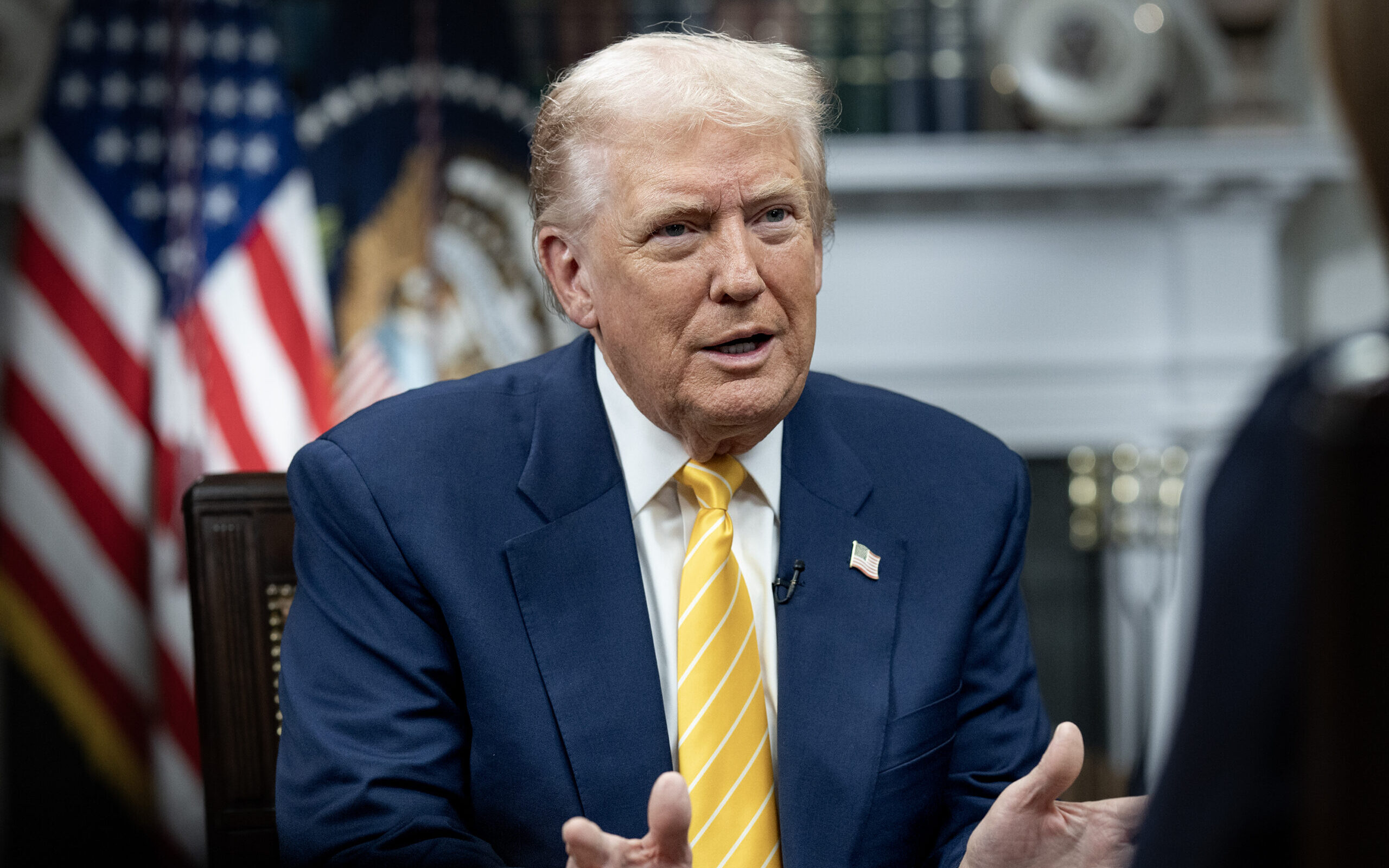
On Friday, the UN General Assembly voted to adopt a new world map that shows Africa’s true size. Togo brought this resolution forward. It aimed to replace the old Mercator map with the Equal Earth projection, which is believed to be more accurate.
The Mercator map is not only wrong about Africa and other regions near the equator but also makes countries far from the equator look bigger than they are. Professor James Cheshire from University College London said the Mercator projection was made in 1659 to help European sailors find their way in the oceans. He told the BBC, “That was what it was intended to do, and that’s what it does brilliantly well.”
But it carries a colonial history and keeps a Eurocentric view of global importance. Yet on Friday, the US voted against adopting the modern, more accurate Equal Earth projection.
PREMIUM TIMES reports that the US was the only country that voted against the resolution. Even Israel, a close US ally that has sided with Washington in the General Assembly lately, voted for the resolution. All 54 African countries also voted in favor.
The US decision has caught global attention and raised questions about its reasoning. Nigerian international relations expert Owei Lakemfa called it “ridiculous.” Francesca Albanese, a UN Special Rapporteur, criticized the US. She argued that it voted against the resolution because it feels uneasy with a world view that doesn’t focus on the traditional Western perspective.
But looking at the US vote against Africa’s interests shows a pattern. A review of major UN resolutions in the past year reveals that the US has often opposed Africa’s interests, especially on issues of justice. Earlier this year, the US went against a call to recognize the transatlantic slave trade as one of the worst crimes against humanity.
PREMIUM TIMES reported that Ghana made this request to the assembly, backed by African nations, seeking healing and reparative justice. Ghana introduced the resolution in March, aiming to declare the “trafficking of enslaved Africans and racialized chattel enslavement of Africans as the gravest crime against humanity.”
A total of 123 member states, including 54 African nations, voted for the resolution. However, 52 countries abstained, mainly European nations. Among those abstaining were Britain, Portugal, and Spain, which played major roles in the slave trade and colonialism.
The transatlantic slave trade is one of the darkest parts of human history. It involved the exploitation, displacement, and dehumanization of millions of Africans. An estimated 15 million Africans were forcibly taken across the Atlantic from the 15th to the 19th centuries. Many died during the journey, while the survivors faced forced labor and abuse in the West.
Yet, the US was one of three countries that voted against the resolution that labeled the slave trade as the worst crime against humanity. The other two were Argentina and Israel. The resolution also urged countries to consider apologizing for the slave trade and set up a reparations fund, which Ghana says will help repair the damage caused by the trade.
Besides pan-African resolutions from African countries, the US has also opposed several other resolutions important to them. Last December, it voted against a resolution on South-South and Triangular Cooperation. This resolution aimed to help developing countries face challenges and meet their goals.
The resolution sought to boost cooperation among developing nations. It also said that funding and resource mobilization are needed to expand such cooperation. A total of 182 countries voted for the resolution, including Nigeria, Niger, Côte d’Ivoire, Senegal, South Sudan, and South Africa. Ten abstained, while the US stood alone in voting against it.
The US also voted against a push to end sanctions against Cuba in October. PREMIUM TIMES reported on the strong ties between Cuba and African nations, which date back to the post-colonial period. Cuba has greatly helped in healthcare, education, and technical training across many African countries.
The resolution aimed to restate the demand for an end to the US economic and financial embargo on Cuba, a point made multiple times before. At least 165 states, including African nations, in the 184-member chamber supported the resolution, including Nigeria, Ghana, South Africa, Angola, and the 50 African member states of the UN. The US was among the seven countries that voted against it.
When the UN General Assembly discussed a high-level meeting to mark the 25th anniversary of the Durban Declaration and Programme of Action (DDPA) in July 2026, the US objected to the timing. The DDPA is a UN framework that aims to tackle racism, discrimination, xenophobia, and related intolerance.
At the General Assembly on Friday, US representative Yaryna Ferencevych claimed the resolution mocked the UN General Assembly's work and purpose. She insisted the resolution was a “superfluous” agenda that distracted from real world issues.
“Instead of focusing on genuine problems of international peace, prosperity, or good relations, this body is debating map projects from the 16th Century, and their role in promoting reparations and ‘cognitive justice’,” Ms Ferencevych said. Her argument becomes hard to defend when compared to actions by President Donald Trump, who has been renaming places without reason.
Mr Trump recently said he renamed Lake Ontario, one of the five Great Lakes in North America, to Lake America. He also announced that he renamed the Gulf of Mexico to the Gulf of America last year.
Further justifying the US’s opposition to the new world map, Ms Ferencevych stated that while the project seems like an effort to update maps, the US sees it as part of a bigger ideological agenda. “When the United Nations questions why it is losing legitimacy and not being taken seriously, we point to resolutions like this,” she said.
But Togo’s Foreign Minister, Robert Dussey, said, “a fair world begins with a fair map.” He added, “A map is never neutral. It shapes perceptions, influences how the place of peoples and continents in the world is understood.”
UN resolutions are not enforceable, so countries are not required to follow them. Still, the resolution might lead to changes in what is taught in schools and everyday technology.
The US also said it rejected the resolution on the transatlantic slave trade because it does not believe countries should pay reparations for actions that were not against international law at the time. The US ambassador to the UN, Dan Negrea, accused African countries of using past suffering to gain funding from others.
He said, “The US objects to the cynical usage of historical wrongs as a leverage point to reallocate modern resources to people and nations who are distantly related to the historical victims.”
In justifying its opposition to the resolution calling for an end to the embargo on Cuba, the US accused Cuba of supporting “terrorist organizations worldwide,” a claim that few believe.
The President of the Society for International Relations Awareness (SIRA), Owei Lakemfa, said the US actions come from its desire for global dominance and its imperialistic nature. “The US sees itself as the commander of the world. It has a mentality of trying to enslave other people, so whenever you have other people moving towards progress, it does not.”
“Although the issue of slavery was mainly a European thing, the US benefited from it. How do you justify reparations for the holocaust, but not for slavery? It’s just not logical for a so-called freedom-loving, pro-human rights establishment,” he added.
Mr Lakemfa called the US stance on the world map “ridiculous.” He believes adopting a more accurate global map will improve knowledge and correct past wrongs. “I don’t see what the US will lose if the map of the world shows its true size.”
“All this shows is that Africa must unite for its Pan-African vision. It is only then that the rest of the world will respect us,” Mr Lakemfa said.
Babafemi Badejo, a political science professor and foreign policy analyst, said the US votes based on its own interests. He said the best solution is for African nations to strengthen their influence and relevance in the world.
“This way, they would be in a better position to shape decisions made by the US and others through persuasive talks,” he said.
Drop your comment
No comments yet — be the first to drop the gist 👇