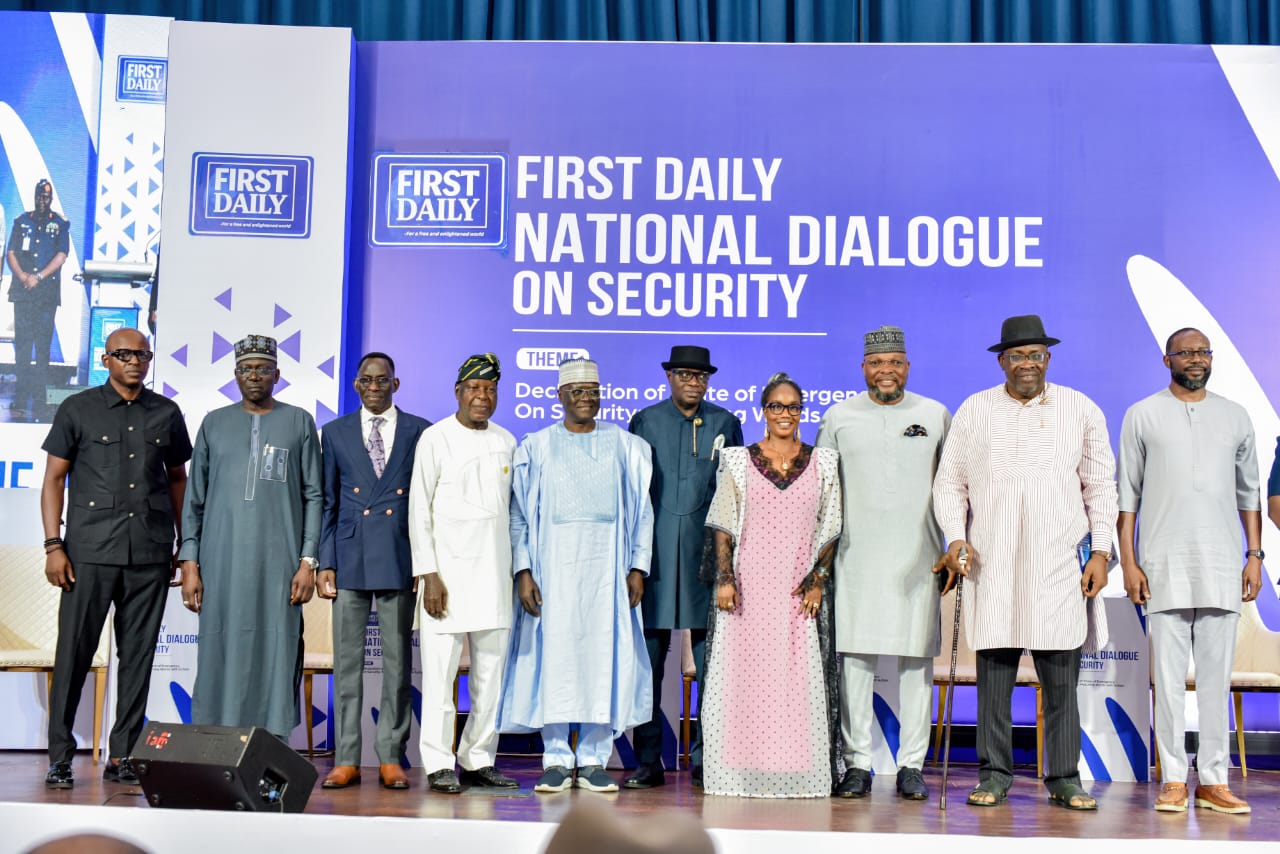
Former military chiefs, politicians and security experts are pushing for state police and more funding for security agencies. They say Nigeria’s security problems are getting worse and need urgent reforms.
This call came on Tuesday at the First Daily Sixth Anniversary National Dialogue on Security in Abuja. This event happened as the National Assembly is working on changing the Constitution to create state police services.
The theme for the dialogue was “Declaration of State of Emergency on Security: Matching Words with Action.” It brought together military leaders, government officials, lawmakers, security experts, traditional rulers, lawyers, civil society groups, and diplomats.
Notable speakers included two former Chiefs of Defence Staff, Lucky Irabor and Martin Luther Agwai, former Bayelsa State Governor and Senator Seriake Dickson, and representatives from Bayelsa State Governor Douye Diri.
Participants agreed that military action alone cannot solve Nigeria’s security crisis. They emphasized the need for stronger internal security systems, better intelligence gathering, more funding, and increased participation from state governments.
In his keynote speech, Mr Irabor, a general, said declaring a state of emergency on security must lead to real actions, not just words. "I believe the emergency on security was a statement of intent. It is necessary to fast-track the work beyond the talk," he said.
The former defence chief called for more funding for the armed forces and security agencies. He argued that Nigeria’s security challenges need more financial support. Mr Irabor also supported the idea of state police, saying it should follow global best practices and have strong accountability.
He asked citizens to help security agencies by being vigilant and participating actively. He said fighting insecurity needs a united effort from all Nigerians.
The push for state police comes after both chambers of the National Assembly approved plans to change the Constitution for state police services. The House of Representatives passed the Executive-sponsored Constitution Alteration (State Police) Bill on July 23, 2026. This bill aims to create a framework for state police across the country.
The Senate also approved its version of this amendment. The proposed changes would create two types of police: state police and Federal Police Service. This is meant to bring policing closer to communities. There are concerns about the size of Nigeria and the burden on the central police.
But just because both chambers approved the proposals does not mean state police are established yet. The different versions from the Senate and House need to be reconciled. After that, the amendment must get approval from at least two-thirds of the 36 state Houses of Assembly before going to the President.
During the dialogue, Mr Dickson pointed out that the weakening of Nigeria’s internal security institutions has led to more military deployments. He said the military's main job is to protect Nigeria’s borders but is now often used for internal security because the police are not strong enough.
"The military’s primary responsibility is territorial integrity. Internal security was only meant to be a subsidiary mandate, but it has now become the main focus because the military is deployed everywhere," Mr Dickson stated.
He said this situation has stretched the armed forces too thin and taken them away from their main job. He argued that insecurity cannot only be solved by sending in the military. "It’s not just military, military, military. It’s better to fight the causes of criminality," he said.
Mr Dickson called for reforms to strengthen internal security agencies and laws to tackle the root causes of crime. He also said Nigeria needs continuous discussions about security to find lasting solutions.
Mr Ayawei, the Secretary to the Bayelsa State Government representing Governor Diri, supported reforms that would give governors more responsibility for security. He noted that citizens hold governors accountable for insecurity, even when they do not control the police.
He described the constitutional amendment process as a chance to give more security duties to state governments. He supported state police as part of the broader changes needed in Nigeria’s security system.
Mr Agwai, one of the dialogue co-chairs, said Nigeria's security problems have turned into complicated internal threats that cannot just be managed by the military. He stressed that governments, communities, the media, and citizens all have important roles in fixing insecurity.
Frank Tietie, a lawyer, who spoke on a panel, called for emergency funding for security agencies. He said serious security threats need serious financial support and urged the government to increase funding for police and armed forces.
Political analyst Mojeed Dahiru said national unity is crucial to tackling insecurity. He urged leaders to respect Nigeria’s diverse religions and promote fairness and inclusion for all citizens.
Earlier, Daniel Iworiso-Markson, the Publisher of First Daily, said the dialogue aimed to create a non-partisan space for practical solutions to Nigeria’s security issues. He urged policymakers to move beyond talk and adopt smart, tech-driven reforms to tackle terrorism, kidnapping, banditry, and other crimes.
The dialogue included talks, panel discussions, and interactions on terrorism, banditry, kidnapping, community violence, intelligence sharing, constitutional reforms, and community involvement in security.
Participants agreed that fixing Nigeria’s security crisis will need stronger institutions, more investment in security, constitutional changes, better intelligence, and ongoing teamwork between governments, security agencies, and citizens. The event was part of the sixth anniversary activities for First Daily Media Network, showing the organization's commitment to promoting informed discussions and solutions to important national issues.


Drop your comment
No comments yet — be the first to drop the gist 👇