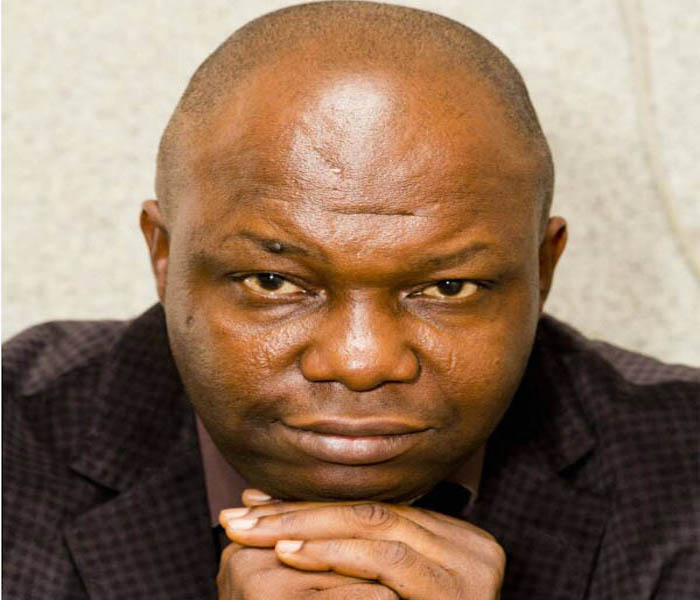
“They just tend not to be honest. Nigerians as a group, frankly, are marvelous scammers. I mean, it is in their national culture.” This harsh statement appeared in the 25 September 1995 edition of The New Yorker. The writer, Colin Powell, stirred up a lot of anger with those words. Powell was a well-known American diplomat, Army General, and later the 65th Secretary of State, being the first Black American to hold that position. His comments were like a rotten smell that people could not ignore.
Years later, Nigeria faced another insult. In May 2016, during Queen Elizabeth II’s 90th birthday at Buckingham Palace, British Prime Minister David Cameron was overheard describing Nigeria and Afghanistan in negative terms. He reportedly said, “We’ve got some leaders of some fantastically corrupt countries coming to Britain… Nigeria and Afghanistan, possibly the two most corrupt countries in the world.”
Nigerians reacted strongly against these views. After Powell’s remarks in 1995, human rights activist Femi Falana told him in The Washington Post, “You should never make sweeping generalisations like that to describe a people. Those comments are very unbecoming of a man of his stature.”
About Cameron’s comments, BBC Diplomatic Correspondent James Landale used a literary method called litotes, where serious issues are downplayed with restrained expression. He said, “On the face of it, it is perhaps one of the most undiplomatic things a prime minister could say, to describe two countries as fantastically corrupt, just hours before their leaders visit Britain. The prime minister’s remarks were outspoken and unguarded, but they were not untrue. Both Afghanistan and Nigeria come high on lists of the world’s most corrupt nations.”
In 2016, Transparency International’s 2015 Corruption Perception Index ranked Nigeria 136th globally, while Afghanistan was 167th, just ahead of Somalia and North Korea.
Since then, things have gotten worse. Nigeria has become like a young man who threw a stone at the Agẹmọ. The Agẹmọ is a chameleon. But in Yoruba tradition, it is a sacred spirit, a servant of Ọlọrun, the Supreme Being. It helped create the Yoruba pantheon of gods and serves as a divine messenger.
Yoruba mythology has a tale explaining why the chameleon can change colors and why the Agẹmọ is so respected. The legend says that a child who throws a stone at the Agẹmọ will not die right away or rot from the wound. Instead, they will fade away into nothing. Their clothes will become tattered, like the àparò, which blends into grass and brush. It seems Nigeria has thrown a stone at the Agẹmọ, leading to a national decline. This has caused a curse, making the country struggle to develop.
If figures like Powell and Cameron could see Nigeria today, they would use even harsher words. We face greedy politicians, a morally weak society, and a future that looks uncertain. The daily news from Nigeria often feels like dirty water leaking from a broken pipe, showing a country that has slipped out of our grasp.
Whenever I feel hopeless about Nigeria’s situation, I seek to confirm my thoughts. Recently, I visited an elderly Senior Advocate of Nigeria. He is known for his honesty in a legal world where many have sold out for money. The man’s head was gray with age and wisdom. I felt I was in the right place.
While we discussed the corruption in the judiciary, my hidden aim was to see if I was losing my mind over Nigeria. We shared our views on the country. He knew mine, but I wanted to know his. After our talk, I regretted it because my despair grew. I left feeling worse, but I was relieved to know I wasn’t alone in my frustration.
Last week, Professor Femi Otubanjo added to my worries. On a TV show, the man I almost studied under at the University of Ibadan made me feel worse. He talked about a broken foundation. Using a biblical idea about a ruined base, he even called on Karl Marx for support. I will add Max Weber’s ideas too. Both discussed the link between what supports society and what is built on top of it.
In his book, The German Ideology, Marx said that a society’s awareness is shaped by its legal and political systems, as well as its infrastructure. Sociology students often use this idea of the link between base and superstructure. It means that social realities come from social structures tied to politics, laws, and morals. It shows how these structures affect people’s lives.
Marx and Weber looked at how the economic base affects the superstructure of ideas, laws, and politics. Simply put, if you build something big on a weak base, as Karl Maier wrote in his sharp biography of Nigeria, This House Has Fallen, that structure will eventually collapse.
Otubanjo applied this to Nigeria’s problems. Bad leaders, widespread corruption, election rigging, a careless public, and a greedy National Assembly that pads budgets make up Nigeria’s weak base. Because Nigeria lacks a solid moral foundation, nothing good can stand on it. Policies that succeed in other countries often fail here.
Nigeria was not built to succeed. This is why political figures like Atiku Abubakar, Peter Obi, and Bola Tinubu keep coming back in elections. They are structures that cannot hold under a weak base. The system is set up to fail, and the democracy enjoyed in other places struggles here due to a flawed foundation. We live in a country controlled by criminals who run elections but expect us to vote. The upcoming 2027 election won’t change our situation; without fixing the foundation, it will likely make it worse. Those were Otubanjo’s alarming words. He even predicted that after the 2027 elections, no matter who wins, we will be back to our sorrow. If you think the current Nigerian structure can bring you happiness, you are the biggest joke.
There are many theories about why Nigeria has not worked well. I call it the colonial blueprint theory. This theory suggests that the British did not plan to build a functional nation. This is echoed in the words of Ahmadu Bello, the Northern Nigerian Premier, who said, “God did not create Nigeria; the British did.” Many examples show that the British did not set Nigeria up to succeed.
This idea links to the “Two Publics” theory by Prof Peter Ekeh. In 1975, Ekeh argued that post-colonial African societies have two moral realms: the civic and the primordial. Today, though, things have changed; even the primordial realm has lost its moral compass, mixing both civic and sacred values.
There are also metaphysical and leadership theories. Some thinkers, like my teacher at the University of Lagos, Professor CS Momoh, believe the Nigerian problem is spiritual. Others see a clash between natural nationhood and a made-up nation-state. They argue that Nigeria is struggling because it is not a true nation but a nation-state. Chinua Achebe belongs to the leadership challenge school. In his book, The Trouble With Nigeria, Achebe said, “the trouble with Nigeria is simply and squarely a failure of leadership.” Others say the voters themselves are so damaged that they cannot support good governance.
Sociologists point to the resource curse that affects countries like Nigeria with rich minerals. This theory says that a culture of looting often develops around natural wealth. Nigeria is especially bad because many criminals have emerged from its oil wealth and now lead the country. In April 2005, retired police officer and Senator Nuhu Aliyu admitted that some senators he worked with had previously been arrested by him. Today, many criminals are called “Excellencies” in the 36 states and in the presidency. These same people make the rules. It reminds me of a song by British reggae band Steel Pulse: “Babylon makes the rules/Where my people suffer…”
We are ruled by corrupt politicians, a tainted business class, a blind public, and a wayward press. We are all on a path to disaster. Corruption has deep roots in Nigeria that go back before the 1914 merger. Because the state is central to life in Nigeria, there is a constant, desperate fight for power. Every four years, we go through these rituals. It is hard to disagree with theologian Ogbu Kalu, who said Nigeria’s political culture “is like a virus, feeding on the red blood corpuscles of the primal world.” From the start, Nigeria has felt like a crime scene or a theatre of the absurd. These absurdities link back to our weak foundation.
All this supports the idea that social realities are products of social structures. Impunity is everywhere, and too many get away with serious wrongdoings.
Just look at the legislature: Deputy Speaker Benjamin Kalu recently explained why his office allocated ₦780 million for a church instead of ₦1 billion, while ₦30 billion is set aside for palaces and places of worship. This is in a country where millions are struggling to eat. A former Deputy Senate President became very wealthy through similar actions: his aides would ask government agencies what they wanted, put those projects in the budget, and send contractors to collect the money. Today, karma has caught up with him.
Even Senate President Godswill Akpabio visited the EFCC before becoming Senate President, but he does not visit the anti-graft agency anymore because Nigeria is not built for accountability. It is an insult for Senate President to be called to answer for his past. Aso Rock itself has leaders with questionable pasts, and the 36 states are havens for corruption. Until we face and rebuild the weak foundation of our nation, every effort for progress will be meaningless, built on shaky ground.
The worst part of the Agẹmọ curse is the claim that the Nigerian presidency is in a corrupt deal with the judiciary. The idea that buying justice in Nigeria is as easy as calling a magician to perform a trick is shocking. It reminds me of when we watched magicians as kids. While the signs are clear, it feels absurd to accept. If true, this connection between the executive and judiciary would mean this house has collapsed. In that case, it is time to close shop.

Drop your comment
No comments yet — be the first to drop the gist 👇