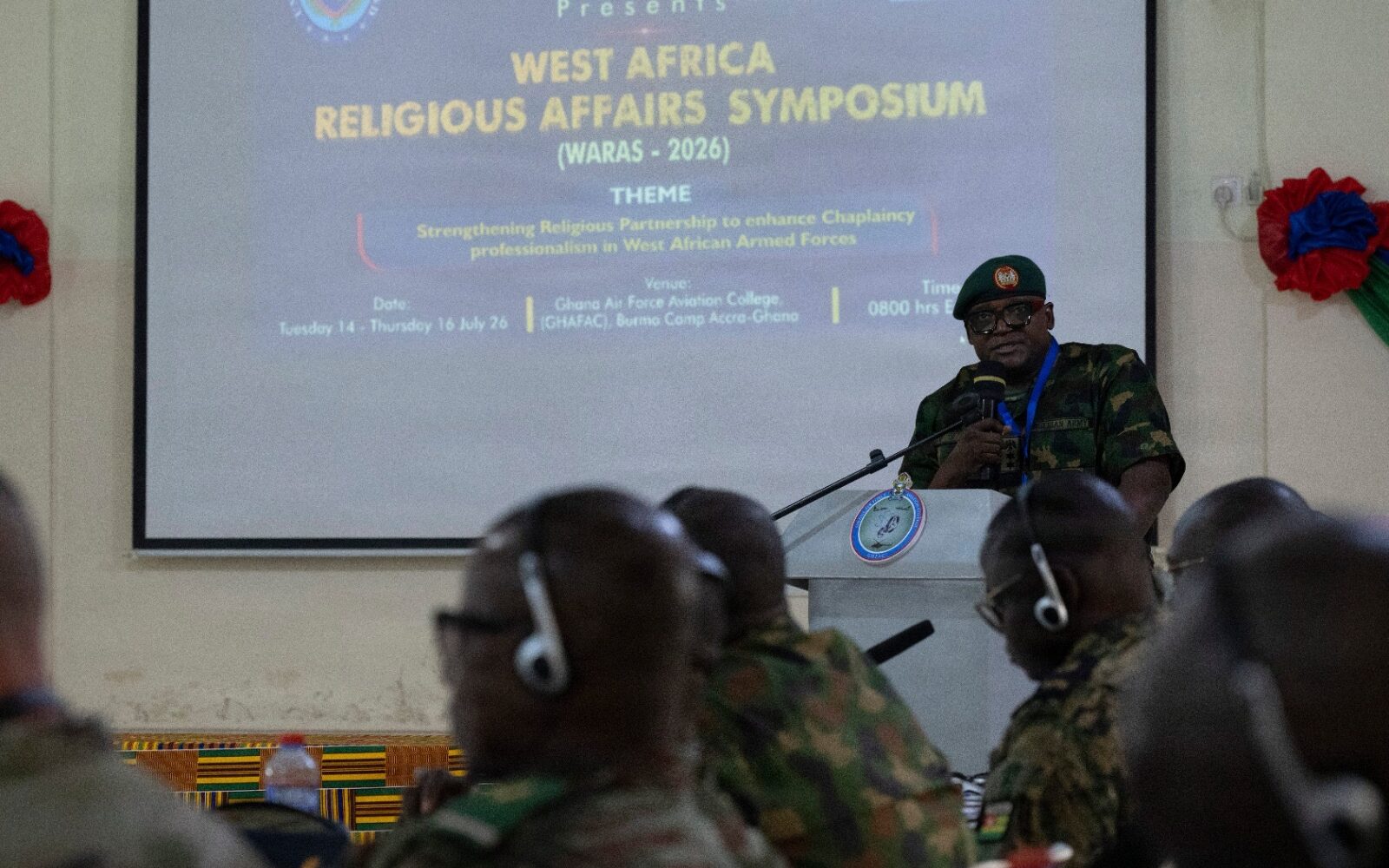
Military chaplains and religious personnel from Nigeria and nine other African countries met in Accra, Ghana, last week for the first West Africa Religious Affairs Symposium (WARAS). US Chaplain Kevin Forrester, the Command Chaplain at US Africa Command, confirmed this event. The meeting focused on chaplaincy's role in military readiness, ethics, and resilience.
The three-day symposium, called WARAS, took place from 14 to 16 July. It was co-hosted by US Africa Command and the Ghanaian Armed Forces. Participants included national security forces from Benin, Burkina Faso, Côte d’Ivoire, Gabon, The Gambia, Ghana, Liberia, Nigeria, Sierra Leone, and Togo.
The gathering brought together Christian chaplains and Muslim religious personnel to discuss how military leaders support troops facing stress, trauma, and moral injury. Organisers aimed to strengthen regional partnerships and improve cooperation among the countries' militaries.
For Nigeria, this symposium is significant due to ongoing military operations against Boko Haram, the Islamic State West Africa Province, bandit groups, and kidnapping networks. These challenges have strained the armed forces and made commanders' work difficult. In such situations, chaplains and military imams provide worship services, counselling, morale support, and help maintain cohesion in mixed-faith units.
Chaplain Forrester, a colonel, and Herinah Asaah attended the meeting. They highlighted the importance of religious freedom in the military. The AFRICOM public affairs office stated, "By focusing on the spiritual readiness and emotional well-being of service members, the symposium helps build a unified, resilient military coalition capable of addressing shared security challenges."
Ms Asaah, a sergeant major, noted, "There are so many things that we can each gain from this symposium. We heard yesterday during the sharing and discussions that there was so much to learn from each other. Some nations were eager to take notes, exchange ideas, and talk about best practices."
The symposium aimed to unite religious leaders and enhance cooperation, using religion as a force for unity rather than division. This approach shows that West African militaries increasingly see chaplaincy as part of force support and operational resilience, not just a ceremonial duty. The US Africa Command mentioned, "Topics include post-traumatic stress disorder, moral injury, ethics, enlisted leader development, ministry in combat, and family care."
The event also highlighted broader security cooperation among Nigeria and its neighbours as cross-border threats grow. For West African militaries, the symposium provided a chance to share experiences and build connections around a service area that is key to national security and regional stability. In a region where insecurity challenges the bonds of faith, force, and nationhood, the quiet work of military chaplains may become one of the military’s strongest lines of defence.
Drop your comment
No comments yet — be the first to drop the gist 👇