The Africa Network for Environment and Economic Justice (ANEEJ) has urged civil society organisations (CSOs) and the media to work harder to expose and stop illegal money flows. They warned that taking public funds away is hurting Nigeria's economy and the welfare of its people.
ANEEJ Executive Director, David Ugolor, said that illegal money leaving Nigeria through scams has robbed the country of funds that could support vital areas like infrastructure, healthcare, education and job creation.
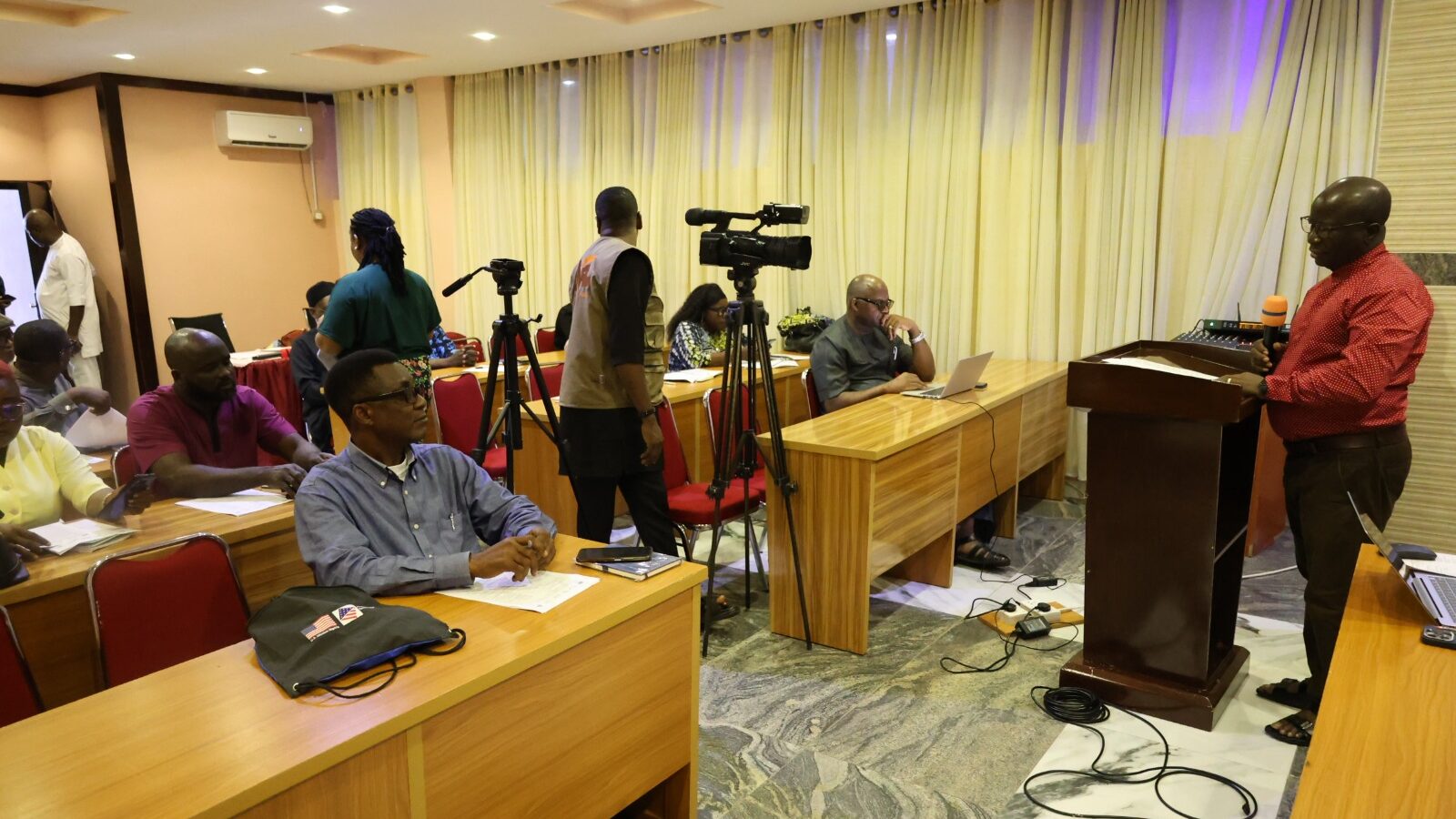
Mr Ugolor spoke during a two-day training workshop for CSOs and media partners held by ANEEJ in Uyo, Akwa Ibom State. The workshop wrapped up over the weekend.
He explained that the effects of illegal money flows are felt most by ordinary Nigerians, who suffer from poor public services and a lack of infrastructure, even though the government has many resources available.
"Illegal financial flows have taken away money that could have been used for infrastructure, healthcare, education, job creation and other essential public services," he said.
Mr Ugolor pointed to the Benin-Sapele-Warri Road project as an example of how financial mismanagement can lead to suffering for citizens.
He claimed that N14 billion was misappropriated from the project, leaving citizens to deal with the fallout from its failure.
PREMIUM TIMES could not confirm this claim independently.
However, PREMIUM TIMES reported that the Minister for Works, David Umahi, is calling for the contractor responsible for the road to be arrested for not finishing the work after receiving N14 billion.
Despite this, Mr Ugolor stressed the need for more citizen involvement and public scrutiny to help agencies combat illegal financial flows.
He urged CSOs and the media to work together to investigate suspicious financial activities, trace stolen assets and hold public institutions accountable.
Philippe Pacaud, the Operations Coordinator of the SecFin Project, also called for better teamwork with CSOs to fight illegal financial flows.
Mr Pacaud warned that illegal money leaving Nigeria and other African nations could be used for criminal activities like corruption and terrorism.
Chinedum Odenyi, representing the NFIU Chief Executive Officer, Hafsat Bakari, said CSOs have key roles in advocacy, research, public awareness, policy involvement and community engagement to tackle financial crimes.
He added that the role of CSOs would be even more important as Nigeria gets ready for its 2027 review of its anti-money laundering, counter-terrorism financing and counter-proliferation financing framework.
The workshop included talks and interactive sessions on illegal financial flows and financial crimes in Nigeria; the country’s legal and institutional framework for fighting illegal money flows; investigative journalism; media ethics; legal risks; source protection; and digital security.
Participants also came up with investigative story ideas and reporting plans focused on illegal financial flows.
Resource persons included Mr Pacaud; Abdullahi Shehu from SecFin Africa; Taiwo Adebayo from the Institute for Security Studies; Aisha Bantam from the NFIU; Adedayo Kayode, managing consultant at Aideasbanc Consulting Limited; and the Editor-in-Chief of PREMIUM TIMES, Musikilu Mojeed, represented by Mr Adebayo.
The workshop was part of ANEEJ’s project to build the capacity of CSOs and the media to fight illegal financial flows, with support from the European Union through the SecFin Africa Project.

Drop your comment
No comments yet — be the first to drop the gist 👇