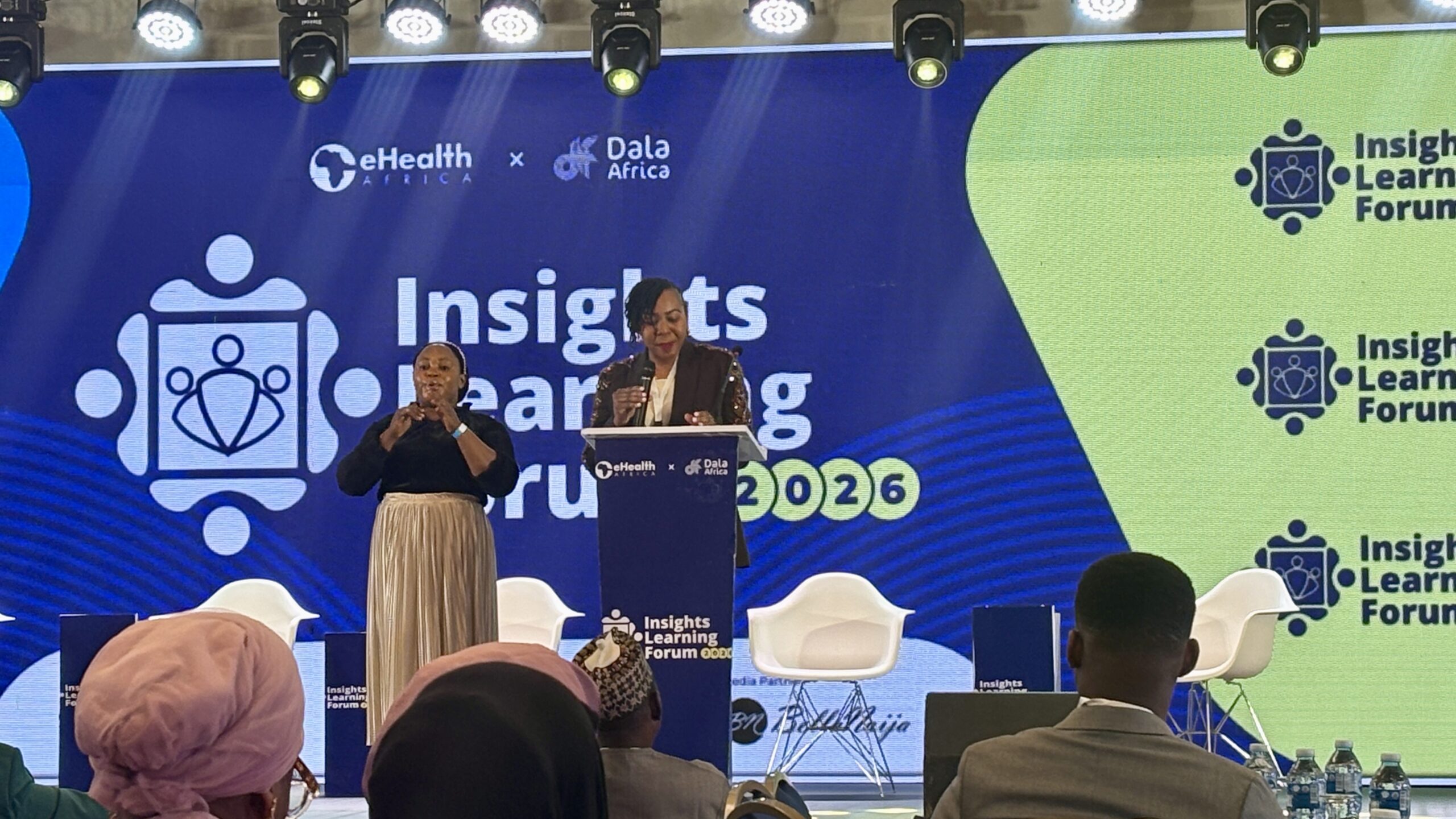
Experts in health and technology have warned that digital tools alone won't fix Nigeria’s healthcare system. They urged governments and development partners to focus on sustainable financing and institutional ownership.
They made this call on Tuesday at the Insights Learning Forum (ILF) 2026. This is eHealth Africa’s main digital health conference held in Abuja.
The two-day forum gathered policymakers, healthcare professionals, technology experts, investors, researchers, and government representatives from Nigeria and beyond. They came together to discuss the future of digital health and find real solutions for improving health systems across Africa.
Beyond digital innovation
During the opening session, Ota Akhigbe, Director of Partnerships and Programmes at eHealth Africa, said we should not just count the number of digital health projects. We should measure success by how well these projects keep running after they start.
Ms Akhigbe said stakeholders must prioritize institutional ownership, sustainable financing, and accountability. These are key to making sure digital health programs continue after donor funding ends.
She pointed out that keeping these systems going is not just the job of governments. Development partners, investors, technology companies, implementers, and community organizations also share this responsibility.
She urged everyone to focus on practical commitments instead of big promises that may not happen. "Our hope is that by this time next year, we will be counting outcomes produced from this year’s forum," she said.
Ms Akhigbe added that one strong commitment, whether it is a new partnership, financing path, or systems integration, could have more impact than many promises that do not lead to action.
‘Digital tools are not enough’
In his speech, Adam Thompson, the Group Chief Executive Officer of eHealth Africa, said nearly two decades of experience have shown that technology alone cannot solve Africa’s health problems.
Mr Thompson explained that when eHealth Africa started in 2009, it aimed to build digital systems to support public health programs. But soon, they realized that digital platforms need reliable infrastructure, trained staff, logistics, and operational systems to work.
"We realized we were trying to deliver the last mile of a system when the road had not yet been built," he said.
This experience led them to expand their focus. They began investing not just in digital platforms but also in the systems needed for those technologies to work well.
He stressed that digital health solutions cannot work where health facilities lack electricity, equipment, supply chains, trained staff, or sustainable financing.
Speed of financing saves lives
Mr Thompson said one key lesson from public health programs is that the speed of fund release often decides the success of emergency responses.
"When a public health emergency happens, the most important thing is how fast you move money," he said.
He explained that delays in funding often slow down the delivery of medical equipment, diagnostics, and essential supplies. This reduces the effectiveness of response efforts.
He argued that efficient financing systems are just as important as data and digital tools during disease outbreaks and public health emergencies.
Improving primary healthcare
Mr Thompson also shared insights from eHealth Africa’s investment in primary healthcare through its eHA Clinics initiative. He noted that many Nigerians spend money seeking treatment from different providers before finally reaching a primary healthcare center. Often, they end up without enough money for the care they need.
He said health systems should be designed to reach patients earlier. This way, they can get timely diagnosis and treatment before their conditions worsen.
Mr Thompson questioned why many professionals working to improve primary healthcare would not choose those same facilities for themselves or their families. He said this honest question helped shape eHealth Africa’s approach to improving quality of care.
"We had to ask ourselves why we would not take our own families to these facilities. Once we answered that question, it became easier to identify what needed to change," he said.
He noted that the organization’s primary healthcare model developed gradually from lessons learned while supporting public health programs, not from a preset plan.
Partnerships remain critical
Mr Thompson said collaboration has been key to eHealth Africa’s work since the beginning. He described partnerships as more than just formal agreements.
According to him, the organization has helped many partners by sharing office space, technical expertise, logistics, and operational resources to support public health programs.
He thanked governments, development partners, and other organizations that have worked with eHealth Africa over the years.




Drop your comment
No comments yet — be the first to drop the gist 👇