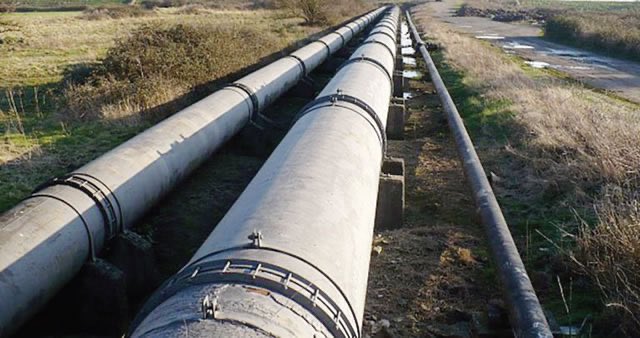
Energy expert Dan Kunle has asked President Bola Tinubu to pause any further commitments to the proposed $27 billion (about ₦43.2 trillion) African Atlantic Gas Pipeline. Mr Kunle believes the project does not have enough commercial backing and could turn into a costly asset for Nigeria with little economic benefit.
In an open letter to the President dated July 23, which is his third letter in three weeks, Mr Kunle said Nigeria should focus on using gas locally instead of pushing for big export projects. He wants answers to important questions about supply, funding, and market demand before moving forward.
His warning comes after all member states of the Economic Community of West African States (ECOWAS) backed the African Atlantic Gas Pipeline project on July 19. This was after they signed an Intergovernmental Agreement (IGA) in Lungi, Sierra Leone. Mr Kunle called the project a potential "Memorandum of Misunderstanding," pointing out the gap between political goals and real economic conditions.
“The project is now estimated to cost about $27 billion (approx. ₦43.2 trillion),” Mr Kunle said. “Recent agreements have pushed it ahead politically, but we still need a project company, investors, and a final investment decision before we can start building.”
He raised major concerns about where the gas will come from. Nigeria has over 200 trillion cubic feet of proven reserves, but Mr Kunle said that having undeveloped reserves doesn’t mean there is enough gas ready for sale. He warned that Nigeria struggles to meet the energy needs of its power plants and industries. He questioned the sense in focusing on long-distance export projects when local energy needs are not met.
Mr Kunle also warned that the project faces big financial, legal, and geopolitical challenges. Unlike the Trans-Saharan Gas Pipeline, which only involves three countries, the African Atlantic Gas Pipeline would pass through or connect more than a dozen West African nations. Each of these countries has different rules, tax systems, and political climates.
“A pipeline of almost 7,000 kilometres is only as strong as its weakest treaty, weakest jurisdiction, and weakest financial participant,” he wrote. He asked how countries involved would fund such a large project and who would take the hit if any nation failed to uphold its commitments.
The expert suggested that Nigeria would benefit more by turning gas into electricity and other industrial products like fertilisers, petrochemicals, methanol, and steel.
“Nigeria has already spent decades exporting crude oil while importing refined petroleum products,” he said. “We must not make the same mistake by exporting gas as a raw material while bringing in products that could have been made from that gas here.”
He believes that Liquefied Natural Gas (LNG) is a better and more flexible option than a fixed pipeline, as it allows for cargoes to be redirected based on market needs.
Mr Kunle urged President Tinubu to instruct the Presidential Petroleum Reform and Value Optimisation Taskforce, led by Mr Fola Adeola, to carry out an independent review of the pipeline project.
He insisted that the pipeline should only move forward if it is funded by private investors, has solid commercial agreements, and clearly offers more benefits to Nigeria than other investment options.
“The government should first publish an independent national gas plan showing how Nigeria will meet its power needs, industries, and other commitments in the coming years,” Mr Kunle concluded. “Only gas that is truly surplus, developed, and commercially available should be considered for new long-term exports.
Drop your comment
No comments yet — be the first to drop the gist 👇