The gap between lawyers and judges was clear by the end of the 16th century. By the end of the 17th century, the divide was strong. The solicitor often tries to keep clients out of court. But sometimes, they need a trial lawyer. In England, that is the barrister.
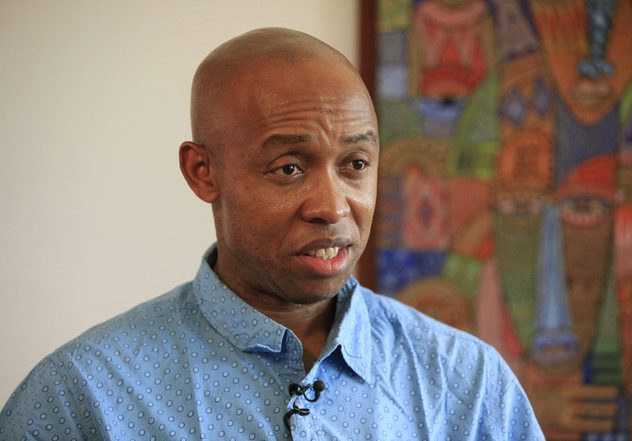
On 20 June 2011, Willy Mutunga became the first Chief Justice of Kenya under the 2010 Constitution. He was a former president of the Law Society of Kenya. Mutunga had a doctorate in law and had worked as a law teacher. He had also faced internal banishment and was a former political detainee and exile. Before his new role, he worked in philanthropy as the regional representative of the Ford Foundation in East Africa. He helped with the new constitution.
Chief Justice Mutunga’s unique background gave him a strong view of law in a post-colonial society. It also prepared him to tackle a big challenge. Kenya’s legal institutions had lost credibility under the old system. They urgently needed to change. Mutunga’s timing in taking this role was perfect.
One of his first actions was to lead reforms in Kenya’s legal institutions and the judiciary. This process involved consultations with magistrates, judges, judicial workers, the public, political leaders, the media, and citizens.
Close to a year into his role, on 31 May 2012, Chief Justice Mutunga launched a four-year Judiciary Transformation Framework. This document laid out ideas to give the legal system in Kenya the spirit of the new constitution.
The Transformation Framework diagnosed a system that was out of touch with the people. It described institutions with a history of power and prestige instead of serving the public. The framework pointed out that the rules, dress codes, and rituals had disconnected it from social reality. As a result, the public saw the legal system as both alien and insensitive.
One big issue was the “dress and address” of legal and judicial professionals. Many people are drawn to a legal career by the way lawyers and judges dress and how they are addressed.
The reasons for these traditions are revealing. One main reason is that there is a theatrical aspect that aims to impress the public. It also gives legal professionals a sense of anonymity and conformity. This helps protect them from angry defendants.
In the end, Kenya’s judges voted to stop wearing wigs. They called them “torturous”, “colonial relics”, “cumbersome”, “uncomfortable”, and “antique.” They also decided to redesign the judicial robe and stop using “My Lord.” Now, judges are addressed as “Your Honor.” In Kiswahili, this means “Mheshimiwa.”
Surprisingly, Kenya’s courts and legal profession did not fall apart. Instead, they seem to have made progress.
Kenya is not alone in this change. In 2011, the Bar in Punjab and Haryana, India, stopped addressing judges as “My Lord” or “Your Lordship.” They called these titles “relics of the colonial past.”
In June 2022, the Chief Justice of the High Court of Orissa in India, Srinivasan Muralidhar, issued a written notice. He asked lawyers and court users to avoid calling judges “My Lord”, “Your Lordship”, or “Your Honour.” He said any respectful form of address, like “Sir,” should be enough.
In Nigeria, the Chief Justice of Nigeria (CJN) sparked a quiet debate about dress and address in the legal field. On 13 July 2026, she ordered the Chief Registrar of the Supreme Court to send out a circular titled “Prohibition of the Use of the Title ‘Barrister’ as a Prefix to Names.”
In a country where many entertainers call themselves “Barrister,” the circular seemed bold. It looked like it could stop Nigeria’s obsession with grand titles.
The circular stated it was for “official correspondence, records, documents, identity materials, and any other official engagements.” This raises questions about what an official engagement includes. Does it cover political rallies, cabinet meetings, or convocation events?
The CJN said using “Barrister” as a prefix is inappropriate and does not meet the expected professionalism within the Supreme Court. While maintaining standards in the legal profession is a good goal, there are at least three major issues with the circular.
First, it focuses on the wrong things. It seems trivial to worry about titles when Nigeria’s legal and judicial professions face much bigger problems.
Second, the circular comes off as a harsh order. The CJN missed a chance to involve people in a discussion about changing the outdated practices in Nigeria’s legal system.
Third, there is an irony in the circular. A judiciary where even female judges want to be called “My Lord” could have been a good starting point for the CJN’s reforms.
The title troubling the CJN is itself part of the colonial legacy she oversees. The legal profession in England has been divided between barristers and solicitors for over 500 years.
Christopher Sapara Williams was the first to enroll at the Inns of Court in England in 1879. In 1888, he became the first barrister and solicitor of the Supreme Court of Nigeria. This was 18 years after the Law Society of England and Wales was formed.
Back then, lawyers were few, and their role was mainly to represent clients in court. They became lawyers in Nigeria because they were part of the Bar in England. The title “Barrister” quickly became popular.
In many Nigerian neighborhoods, there are different names for local professionals. For example, “Dokkie” for doctors and “Deelaw” for lawyers. Lawyer and footballer Adokiye Amiesimaka was famously called “Chief Justice” by commentator Ernest Okonkwo, and it stuck. The CJN cannot just erase these titles.
In truth, “Barrister” does not fully capture what a lawyer is or does. So, it is not a fitting title. But this is a small issue compared to the bigger problems facing Nigeria’s legal profession.
As Richard du Cann notes, “the word ‘advocate’ is applied to both barristers and solicitors in all courts and tribunals other than the Crown Court and the High Court.” In many East and Southern African countries, lawyers are simply called “Advocate.” In South Africa, where the legal profession is divided like in England, “Advocate” only refers to barristers.
How we dress and address lawyers and judges in Nigeria matters. But what matters more is whether we care to correct the lost mission and spirit of these institutions. The Chief Justice of Nigeria may have missed a chance with her circular, but it is not too late for her to find a clear path forward.

Drop your comment
No comments yet — be the first to drop the gist 👇